
The word versus suggests two competing methods, yet the labels in this comparison describe different characteristics. DNA and RNA identify the material being recovered; magnetic beads identify a purification mechanism. A DNA and RNA extraction kit can use that very mechanism. Answering which is better therefore requires a common testing task, followed by comparison of the reagents and procedures that could perform it, rather than a ranking based on names alone.
Separate the Analyte from the Extraction Mechanism
Two descriptions can apply to the same reagent without contradiction. A DNA and RNA extraction kit states a scope covering both nucleic acid classes, subject to its intended use. A magnetic bead DNA extraction kit describes DNA preparation using a magnetic solid phase. The second description neither establishes RNA recovery nor rules out another magnetic reagent designed for both analytes.
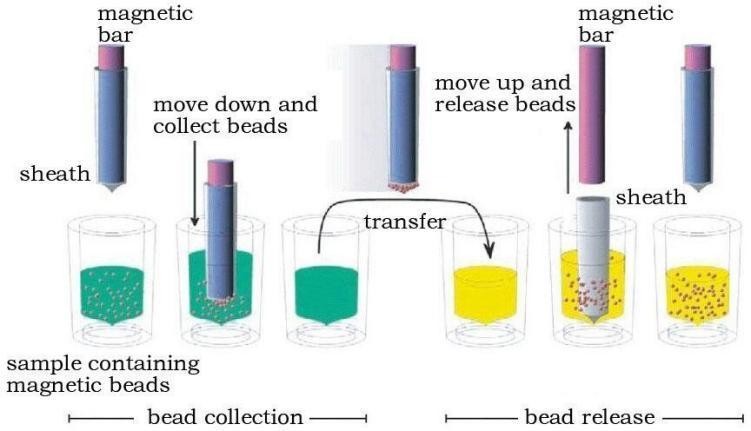
During a magnetic procedure, nucleic acids associate with bead surfaces under suitable binding conditions. Magnetic separation retains the solid phase while liquid is removed or exchanged. Subsequent washing and elution serve different chemical purposes. The magnet organizes separation; the complete reagent system and protocol determine how the intended material is captured and released.
This distinction changes the comparison question. The meaningful alternatives are named reagents suitable for a defined analyte and specimen, with their respective operating procedures. Comparing an analyte category against a mechanism category would combine two classification axes and leave the laboratory without evidence about the actual task either product can perform.
Give the Comparison a Shared Testing Objective
A viral RNA assay and a human DNA assay ask extraction to deliver different materials. Their specimen labels may overlap, but their preparation objectives remain distinct. Before assessing speed or automation, the laboratory can identify the target material required by the intended molecular test and exclude reagents whose stated use does not address that objective.
Magnetic chemistry also underlies a reagent designed for both viral nucleic acid classes: the BioPerfectus Viral DNA/RNA Extraction Kit (Magnetic Bead Method). A second reagent, the Whole Blood DNA Extraction Kit (Magnetic Bead Method), uses the same mechanism to purify DNA from human whole blood. Here, matching mechanisms coexist with different preparation objectives.
A magnetic bead DNA extraction kit can therefore be relevant to a DNA request without providing evidence for an RNA request. Conversely, a reagent described as covering DNA and RNA still needs an applicable analyte statement and specimen scope. Broader wording does not answer whether the particular material required by the laboratory has a supported extraction route.
Compare Measurements Under Matching Conditions
Sample input, elution volume and recovered quantity answer separate questions. Input describes the material committed to preparation; eluate describes the liquid recovered; yield describes the nucleic acid obtained. Comparing one product’s input with another product’s eluate would misidentify the quantities before any performance judgement could begin.
Within the BioPerfectus examples, the viral kit specifies a 200–800 µL input and 70 µL eluate. The whole-blood DNA kit specifies 200 µL and 100 µL respectively. These figures belong to different intended uses. They explain each procedure’s material flow without demonstrating that one reagent recovers more of a shared target than the other.
A direct recovery comparison would require comparable starting material, a defined target and a consistent measurement method. Otherwise, a difference can originate in the input rather than extraction performance. The same caution applies to purity: concentration and absence of interference are different properties, so a larger nucleic acid measurement cannot by itself establish better downstream amplification.
Replicate preparations provide another comparison beyond a single yield figure. With a defined starting material, repeated extractions can be examined for variation in the receiving assay and for evidence of interference.
A candidate that produces an acceptable average still needs assessment of individual preparations. Such observations establish performance for the tested combination; the comparison record needs the specimen, reagent, instrument program and analytical method so that evidence remains attached to what was actually evaluated in the laboratory.
Timing also requires equivalent endpoints. A purification interval and a route that includes reaction setup cover different work. Comparisons can retain both figures if each operation is named, but the shorter number cannot be treated as evidence of a faster complete testing pathway. The proposed workflow supplies the basis for deciding which interval matters.
Choose Between Applicable Procedures
Once both candidates address the same target and specimen, practical differences become meaningful. The instrument must execute the required protocol, the available sample must meet the input condition, and the eluate must suit the receiving test. A DNA and RNA extraction kit earns a place in that comparison through its supported application and operating requirements.
The two BioPerfectus products demonstrate that magnetic chemistry can serve distinct analytical purposes. Assessment of a magnetic bead DNA extraction kit can then focus on the proposed DNA procedure, its materials and the evidence connecting preparation with the intended assay. Any claim of superiority needs a defined comparison and supporting results under relevant conditions.
A fair choice emerges from equivalent tasks and interpretable measurements. Analyte scope establishes eligibility, while the specimen, protocol and downstream requirements establish practical suitability. Neither label wins by containing more nucleic acid types or by naming a separation technology; the better option is the supported procedure that answers the laboratory’s particular molecular testing question.