Specialized rubber products often cannot be produced efficiently with a standard press and an independently sourced mold. Material flow, cavity layout, injection capacity, clamping sequence, handling, and automation must be developed together. A custom injection molding machine project therefore benefits from coordinated responsibility across equipment and tooling.
A custom injection machine mold company is expected to manage project risk as well as equipment scope. Before design freeze, the parties should record material, mold, automation, safety, schedule, and acceptance risks; assign responsibility for each interface; and define who approves changes and retesting. This structure reduces disputes and makes FAT and SAT evidence easier to evaluate. Turnkey demand grows when manufacturers want fewer interface disputes, clearer acceptance criteria, and a smoother transition from design decisions to stable factory output.
Build a Project Risk Register Before Design Freeze
Engineering is required to begin with drawings, tolerances, material data, annual volume, cavity strategy, inspection methods, and allowable cycle time. The largest product is not the only concern. Frequent changeovers, insert loading, cleaning, and maintenance access may exert greater influence on daily capacity.
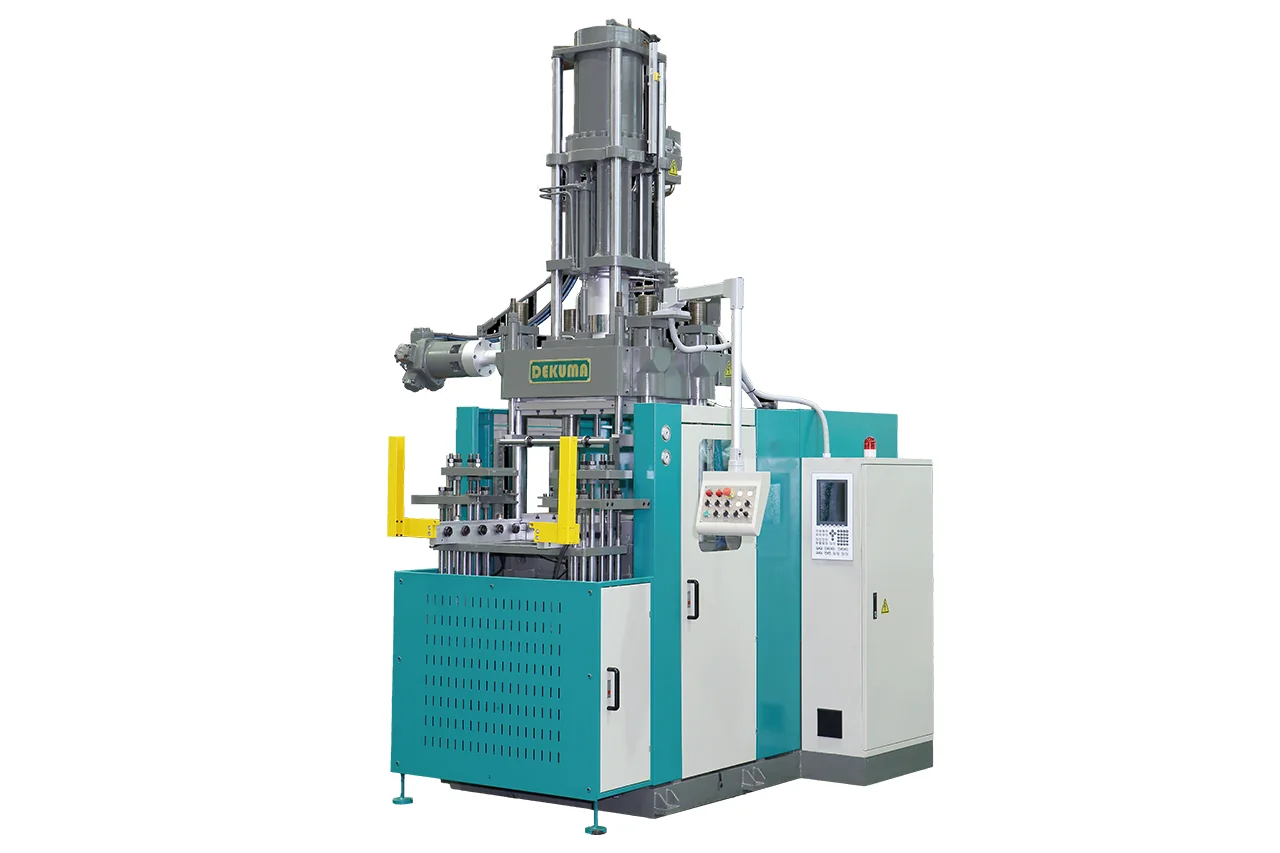
Dekuma offers customization across plasticizing and injection, clamping, electrical and hydraulic control, temperature systems, mold handling, ejecting, feeding, cold runners, vacuum equipment, guarding, and safety options. These modules can be combined around a documented production need.
Before design freeze, the project team should maintain a risk register covering shot calculation, mold access, runner and vent design, material behavior, automation interfaces, safety, utilities, inspection, schedule, and acceptance evidence. Each risk needs an owner, proposed control, due date, and closure record. High-risk assumptions should be tested before hardware is released so that late discoveries do not become undocumented machine changes.
The mold and machine layouts are expected to be reviewed simultaneously. Nozzle position, runner path, venting, heating, ejector movement, and services must fit the selected platform. Three-dimensional envelope checks can expose conflicts before hardware is manufactured.
Assign Responsibility Across Machine, Mold, Material, and Automation
The custom injection machine mold company must provide enough adjustment to establish a stable process without creating needless complexity. Dekuma’s platform offers three injection zones and three dwell zones with independently adjustable pressure and speed.
Turnkey acceptance must assign responsibility for each interface and define measurable pass criteria before the build is complete. Product dimensions, repeatability, cycle behavior, guarding, alarms, and recovery sequences are required to be tested together, because success in an isolated machine cycle does not prove that the full cell is production-ready.
Responsibility should be divided across the machine, mold, material, automation, and inspection interfaces. The machine supplier may control motion and process logic, while the mold supplier remains responsible for the agreed runner, venting, heating, and ejection design. The customer must provide approved material data and acceptance methods. Third-party automation ownership should include signals, guarding, recovery states, backups, and maintenance access.
Separate heat-transfer-oil circuits for plasticizing and injection barrels allow different thermal requirements to be managed. Mechanical or hydraulic mold lifting, sliding devices, single- or double-layer ejectors, silicone feeding, and vacuum systems can be selected when justified by the process.
Every adjustable function needs a documented purpose and safe limit. Excessive freedom can encourage uncontrolled tuning. Validated recipes, access permissions, and change records help ensure that flexibility supports engineering rather than undermining repeatability.
Control Changes Through Review, Approval, and Retesting
Every requested change should enter a controlled review process. The record should explain the reason, identify affected drawings, software, tooling, safety functions, cycle time, and acceptance criteria, and name the person authorized to approve it. Changes affecting material flow, mold movement, automation, or inspection should trigger defined retesting. Verbal approval during debugging should not become the final production baseline.
Acceptance should include sustained production rather than one acceptable sample. Cycle consistency, dimensional results, scrap, alarms, energy use, and operator tasks reveal whether the cell is ready for transfer. Unresolved differences between test and factory conditions should remain on an action list.
Fault scenarios also require testing. Missing inserts, incomplete ejection, sensor disagreement, utility loss, and interrupted cycles should lead to safe states and controlled recovery. This work is critical because custom automation may behave differently from a standard machine after an abnormal stop.
Documentation should capture drawings, software versions, settings, mold services, spare parts, and maintenance points. Accurate records give commissioning teams a stable baseline and reduce the risk that late changes exist only in individual memory.
Close Risks with FAT, SAT, Documentation, and Recovery Plans
FAT should close machine, mold, automation, safety, documentation, and sample-quality risks under agreed test conditions. SAT should then confirm utilities, interfaces, recipes, recovery, operator tasks, and accepted output at the production site. Any open item needs an owner, deadline, interim control, and retest method. Final handover should include approved drawings, software backups, recipes, spare-parts lists, training records, and escalation contacts.
Dekuma includes remote guidance, on-site installation, training, pre-delivery testing, and continuing support in custom projects. The contract should identify response channels, local responsibilities, critical-spare recommendations, and the acceptance boundary for third-party equipment.
A custom injection machine mold company creates value when machine, mold, material, automation, and service are treated as one accountable system. The result should not merely be unusual equipment. It should be a maintainable process that repeatedly produces the specified part under realistic factory conditions.
Commercial scope should follow the same clarity as technical scope. Milestones, sample quantities, acceptance duration, responsibilities for consumables, travel, third-party devices, and corrective work should be written before the order. Clear boundaries reduce delay without weakening accountability when an interface problem appears.
After launch, a structured review can compare actual scrap, labor, energy, changeover, maintenance, and output with the approved business case. Differences may justify process adjustment, additional training, or a later automation phase. This staged evidence is more reliable than installing every possible option at the beginning.
Configuration backups and controlled software access also protect recovery. A verified backup should be created after final acceptance and after every authorized logic change.